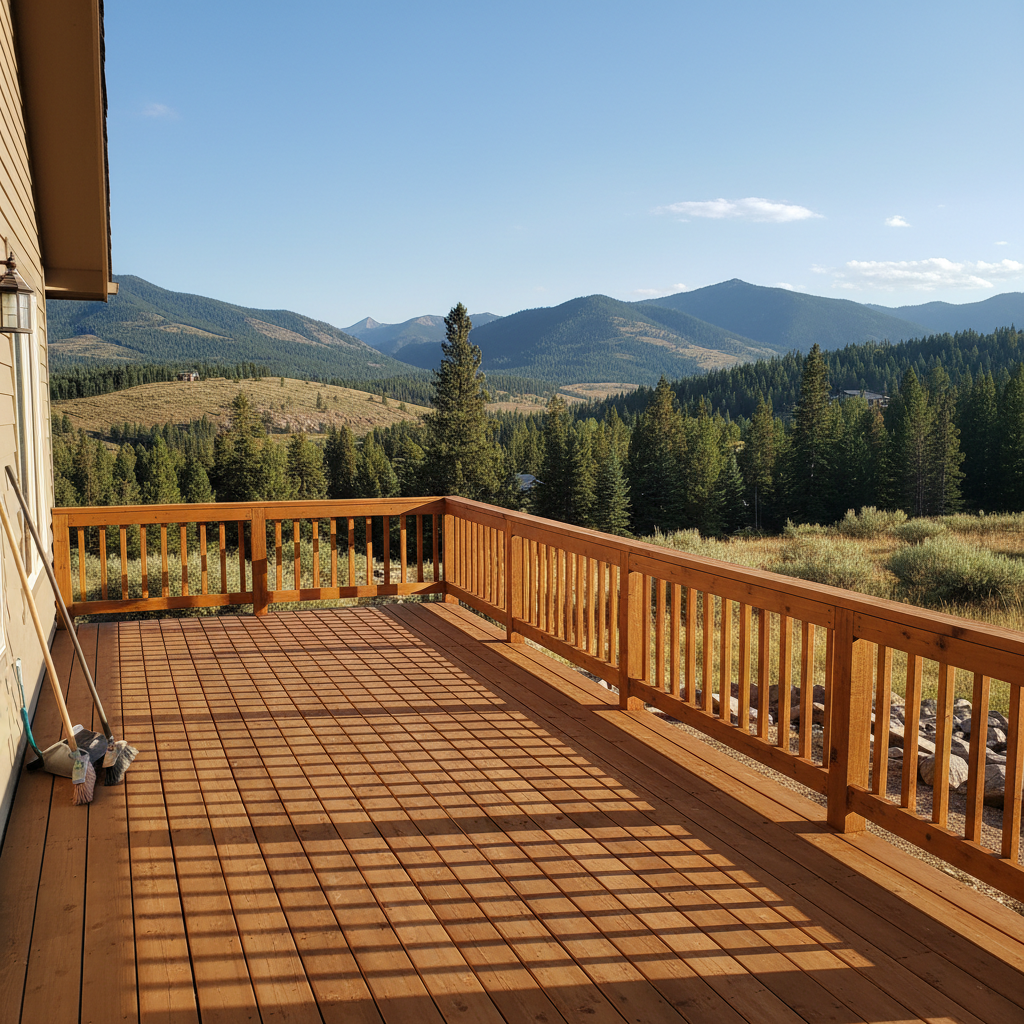
You just invested in a fresh deck stain, or maybe you're thinking about it. Good call. A well-stained deck doesn't just look great; it protects your wood from our brutal Big Sky weather. But that stain isn't a 'set it and forget it' kind of deal. If you want it to last, you've got to give it a little love.
Extending the Life of Your Deck Stain
Our climate here in Big Sky is tough on everything, especially wood. We get intense UV rays at this elevation, heavy snow loads, freeze-thaw cycles, and sometimes even hail. All of that works to break down your deck's finish. So, what can you do to fight back?
- Keep it Clean: This is probably the biggest one. Dirt, pollen, pine needles, and general grime hold moisture against the wood and encourage mildew growth. That's a recipe for stain failure. I recommend a good cleaning at least once a year, maybe twice if your deck sees a lot of action or is under heavy tree cover.
- Trim Back Overhanging Branches: Less shade means less moisture retention on the deck surface. Plus, fewer leaves and needles to fall and decompose on your beautiful stain.
- Use Deck Furniture Pads: Dragging chairs around scrapes the finish. Little felt or rubber pads on the feet of your furniture can make a big difference in preventing wear and tear.
- Protect Against Snow and Ice: While you can't stop the snow from falling, try to avoid letting huge drifts sit on your deck for months. When you're shoveling, use a plastic shovel and be careful not to scrape the deck surface. Never use rock salt or harsh de-icers; they can damage both the stain and the wood itself.
- Consider a Good Quality Stain from the Start: This isn't maintenance, but it's crucial. I always tell folks that a cheap stain upfront often means more work and expense down the road. We at Big Sky House Painters only use stains that are proven to stand up to our unique mountain environment.
Regular Maintenance: What Does That Look Like?
Beyond the yearly cleaning, regular maintenance is mostly about observation. You're looking for early warning signs before they become big problems.
- Monthly Visual Check: Just take a walk around your deck. Are there any areas that look particularly worn? Is water still beading up, or is it soaking in? Are there any spots where mildew is starting to form?
- Sweep Regularly: Don't let leaves, dirt, and debris sit on your deck. A quick sweep once a week or every couple of weeks keeps the surface clear and reduces the chance of moisture getting trapped.
- Spot Clean Spills Immediately: Grilling grease, spilled drinks, or pet accidents can all leave permanent marks or degrade the stain if left too long. A little soap and water right away can save you a lot of headache.
- Gentle Cleaning: For your annual wash, a simple deck cleaner designed for stained surfaces is usually best. Follow the manufacturer's instructions. A soft-bristle brush and a garden hose are your friends here. Avoid pressure washing unless you really know what you're doing, as it can easily strip the stain and even damage the wood fibers, especially on softer woods like cedar or redwood.
Warning Signs of Problems
Your deck will tell you when it needs attention. You just need to know what to listen for.
- Fading or Discoloration: This is often the first sign. The color might look dull, patchy, or uneven. This means the UV protection is breaking down.
- Water Soaking In: If water no longer beads up on the surface but soaks into the wood, your stain's protective barrier is compromised. This is a big one, as it means the wood is now exposed to moisture damage.
- Peeling or Flaking: This usually indicates a film-forming stain (like a solid color) is failing. Once it starts peeling, it's not long before the wood underneath is exposed.
- Mildew or Algae Growth: Green or black spots mean moisture is lingering. While cleaning can remove it, persistent growth suggests the stain isn't doing its job to repel water effectively, or you've got too much shade and not enough airflow.
- Graying Wood: If you see the wood itself starting to turn gray, that means it's been exposed to the elements for too long and the UV rays are breaking down the wood fibers. You're past the point of simple maintenance and likely need a full re-stain.
When to Call a Professional
Look, you can do a lot of this maintenance yourself, and I encourage it. But there are times when it's smart to bring in the pros.
- Extensive Peeling or Fading: If your deck looks like a patchwork quilt of failing stain, it's probably time for a full strip and re-stain. That's a big job, and getting it right requires specific tools and expertise to ensure proper adhesion and longevity.
- Gray, Weathered Wood: If your deck has gone gray, it needs more than just a clean. It needs proper cleaning, brightening, and potentially sanding to restore the wood before a new stain can be applied effectively.
- You're Short on Time or Tools: Let's be honest, life in Big Sky is busy. If you don't have the time, the right equipment, or the inclination to tackle a big deck project, that's what we're here for.
- Unsure About the Process: If you're not confident about choosing the right cleaner, applying it correctly, or what type of stain was used previously, give us a call. We've seen it all and can guide you through the best approach.
Taking care of your deck isn't glamorous, but it's essential for protecting your investment. A little effort goes a long way in keeping your Big Sky deck looking great and standing strong against whatever our mountains throw at it.