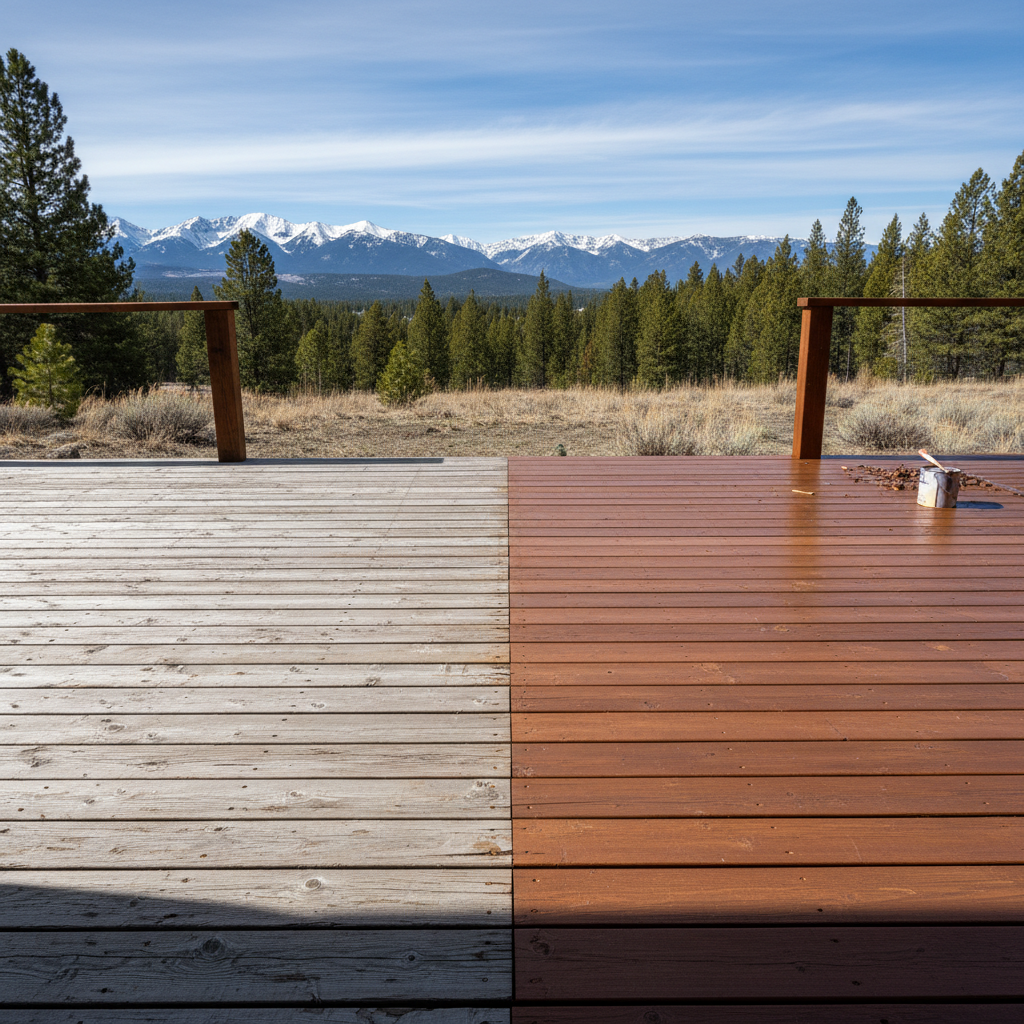
Your deck takes a beating up here in Big Sky, plain and simple. Between the heavy snow loads sitting on the wood for six months, intense UV rays at 7,000 feet, and rapid temperature swings, exterior wood surfaces do not get an easy ride. Homeowners are usually trying to figure out how to protect their outdoor living space this season, and they are probably weighing two main staining approaches: going with a transparent, natural-look stain or committing to a solid color finish. Big Sky House Painters has seen how both options perform after a few brutal winters in neighborhoods like the Meadow Village or up on the Ridge. Let us break down how transparent stains and solid stains actually stack up against each other so you can make the right call for your property.
Transparent and Semi-Transparent Stains
Transparent and semi-transparent stains are all about showing off the natural grain of the wood. If you have got a gorgeous cedar or timber-frame deck, covering it up feels like a crime. These products sink deep into the pores of the wood rather than sitting on top as a film. That means they will not crack or peel when the wood expands and contracts.
The downside? They do not last as long under Montana's punishing sun. You will likely need to reapply a transparent stain every two to three years, especially on south-facing boards that get baked all summer long. On the flip side, maintenance is relatively painless. When it is time for a refresh, you usually just clean the deck and roll on a new coat without heavy scraping or sanding.
Solid Body Stains
Solid stains act more like a thin paint. They lay down a heavy layer of pigment that completely covers the wood grain while still letting some of the wood texture peek through. If your deck is older, made of mixed lumber, or has seen better days, a solid stain hides a multitude of sins.
Durability is where solid stains shine. They offer much stronger UV protection because of the heavy pigment load, meaning you might get four to five years out of a good application before needing another coat. But here is the catch—when solid stains finally do fail, they tend to peel and flake. Fixing that failure requires scraping, sanding, and stripping before you can put down fresh product. It turns a quick weekend maintenance job into a much bigger project.
Cost and Upkeep Realities
Upfront costs for both approaches are fairly similar, but the long-term math looks different. Transparent stains demand more frequent labor, but each round is cheap and straightforward. Solid stains buy you more time upfront, but the eventual stripping and prep work will cost you more in time and materials down the road.
Water shedding is another big factor in our climate. Ice dams and melting snow can trap moisture under failing film-forming solid stains, leading to rot if you are not paying attention. Penetrating transparent oils let the wood breathe naturally, releasing trapped moisture before it causes structural damage.
Making the Right Call for Your Mountain Home
If you love the look of natural wood and do not mind a quick maintenance routine every couple of years, stick with a high-quality semi-transparent oil. It moves with the wood and handles our wild weather shifts gracefully. If your deck boards are weathered, mismatched, or you just want a bold color that matches your cabin trim, a solid stain is the way to go—just be ready for proper prep work when it eventually wears down. Take a good look at your deck's exposure to the elements, pick your approach, and get it protected before the next snowfall hits.